
Garage door repair
Broken garage door spring? Leave the door where it is.
A snapped torsion spring leaves a heavy door with nothing holding it up. We replace the broken spring, and usually its partner too, then set the tension so the door balances and the opener only has to guide it.
Quickest is a call: (615) 810-6415
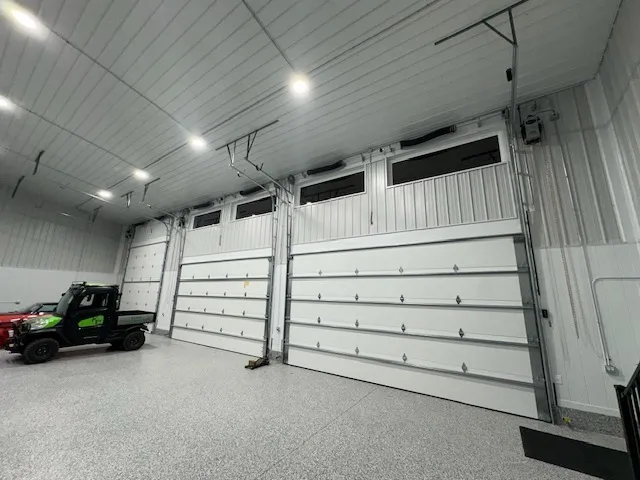
How do you know a spring has broken?
Most people hear it first. A torsion spring lets go with a bang loud enough to sound like something fell over in the garage, and afterward there’s a visible gap in the coil on the bar above the door.
Then the door stops cooperating. The opener hums, lifts it a few inches and gives up or reverses, the door feels like dead weight, and the lift cables may hang slack beside the tracks. Doors with extension springs, the long ones stretched along the horizontal tracks, show it differently: one side sags, or the spring is lying on the floor.
If that’s your door, stop running the opener. It was built to guide a balanced door, and asking it to lift the whole weight strips gears and bends the top section.
Why change both springs when only one broke?
Because they went up on the same day and have opened the door the same number of times. On a two-spring door, the survivor usually isn’t far behind. Melissa in Franklin made that call herself when Chad came out:
Last night, one of the springs on my garage door mechanism broke. … I called Chad with Kingdom Doors. He arrived promptly at 8:30 this morning and replaced 2 springs for me. Only one had snapped but I decided to go ahead and replace both as the other may fail soon too. … He also replaced the track rollers for a very minimal extra … My garage opens and closes so much more quietly now.
Melissa, Franklin
The rollers she mentions are worth a look on any spring visit. Worn ones drag in the track and grind, and they’re easier to swap while the door is already being worked on.
Does the spring have to match the door?
It does, closely. A spring is sized to the door’s weight, its height and the drums the cables wind on. Too weak, and the opener ends up lifting what the spring should carry. Too strong, and the door won’t stay down without a fight.
That matters most on heavy doors. Real wood, an insulated door that replaced a thin steel one, or a door with full glass sections all weigh more than what came before, and both the springs and the opener have to be chosen for that weight or the motor wears out early. A stained wood carriage door from Carriage House Doors, for one, is a different load from the steel door it often replaces. If a heavier door is in your plans, our page on wood garage doors goes into it, and so does the one on openers.
Is a spring change a do-it-yourself job?
We’d talk you out of it. A wound torsion spring stores enough energy to lift the whole door, and it’s let off by hand with steel winding bars, a quarter turn at a time. A slipped bar or the wrong tool turns that energy loose on your hands and face. Extension springs are less dramatic, but without a safety cable running through them they can fly apart across the garage.
A tune-up is the safe way to have the tension checked before anything snaps. And if a spring has already gone with the car shut inside, call us at any hour; Clay or Chad will tell you on the phone what to leave alone until we get there. Don’t let the opener keep trying, LiftMaster or not. In the February 2021 ice storm we saw what a motor does to itself, and to a bottom panel, pulling on a door that won’t lift.
Answers
Garage door spring replacement: questions people ask
How much does garage door spring replacement cost?
It comes down to the door. A heavier or taller door takes a larger spring, two-spring doors usually get both changed, and worn rollers or frayed cables add to the bill if they’re replaced on the same visit. Clay or Chad can price it over the phone once they know the door’s size and spring type.
How long do garage door springs last?
Springs are rated in cycles, and one cycle is the door going up and coming back down. A door that runs four times a day wears its springs out much faster than one opened twice a week, so age alone tells you little. Squeaking, a door that won’t stay halfway or a gap in the coil means it’s close.
Is it safe to open a garage door with a broken spring?
No. Without the spring, the full weight of the door is on the opener, the cables and whoever is lifting it. The opener can strip its gears or bend the top section, and a door lifted by hand can come down hard. If a car is trapped inside, call us before you try anything.
Can I replace a garage door torsion spring myself?
We advise against it. Torsion springs are wound tight on the bar above the door, and swapping one means letting off that tension and putting it back with steel winding bars. One slip causes serious hand and face injuries. Extension springs are less risky but still need safety cables through them.
What’s the difference between torsion and extension springs?
Torsion springs sit on a steel bar above the door and twist to lift it; extension springs run along the horizontal tracks and stretch. Torsion springs give a smoother, more controlled lift and are on most doors hung today, while extension springs turn up on older and lighter doors.
Why is my garage door suddenly so heavy?
A broken or worn-out spring, nearly every time. The springs carry the door’s weight so it feels light by hand, and when one snaps or loses tension, that weight comes back all at once. Look for a gap in the coil above the door, and don’t keep running the opener against it.